
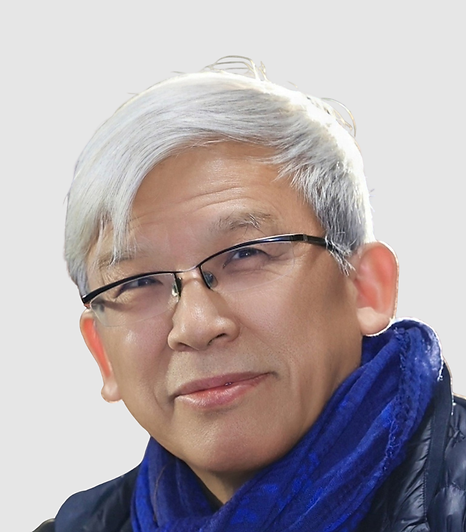
ZHAO Feng
Qiushi Distinguished Professor, Zhejiang University and Professor at the School of Art and Archaeology
Zhao Feng is a Qiushi Distinguished Professor at Zhejiang University, Director of the Center for Silk Art and Silk Road Culture Studies, and holder of the UNESCO Chair on Silk Roads Heritage. He also serves as a Senior Research Fellow at the Hong Kong Palace Museum, a Board Member of the Hong Kong Maritime Museum, a member of the Executive Board of the International Council of Museums (ICOM), and President of the International Association for the Study of Silk Road Textiles. He previously served as Director of the China National Silk Museum.
His long-term research focuses on textile archaeology, the conservation of Chinese textiles, museum studies, and the art history of the Silk Roads. He has undertaken visiting research and collaborative projects at leading international institutions, including The Metropolitan Museum of Art, New York (1997–1998), the Royal Ontario Museum, Toronto (1999), the British Museum, London (2006), the Needham Research Institute, Cambridge (2024), and the Max Planck Institute for the History of Science, Berlin (2026).
Professor Zhao has published more than one hundred scholarly articles in both Chinese and English. He is the author and editor of numerous influential publications, including Chinese Silk Art, The Complete Collection of Dunhuang Silk Art, and Jincheng: Chinese Silk and the Silk Roads.
Second, as evidenced by the 2025 academic conference on Chinese export art in Hangzhou, while the field has yielded substantial results in recent years, there remains limited research from the perspectives of the history of technology and the history of knowledge; this indicates room for further expansion and refinement of the field's disciplinary structure.
Therefore, Chinese export goods from the 18th and 19th centuries were not merely commodities in international trade but also vital media through which Western society perceived and constructed its overall image of "China." These objects—spanning science, art, culture, and history—have survived in various forms such as physical artifacts, paintings, and documents, collectively serving as crucial material evidence for studying the development of Chinese science and technology during that era. Consequently, the study of Chinese export art should not be confined to the realms of art history or trade history; rather, it should contribute to reconstructing the comprehensive knowledge system of Chinese science and technology from the 18th and 19th centuries. It is hoped that the discussions at this conference will propel the study of Chinese export art toward new academic horizons and greater scholarly depth.